

NEWS&EVENTS
-
NEWS
-
REPORT
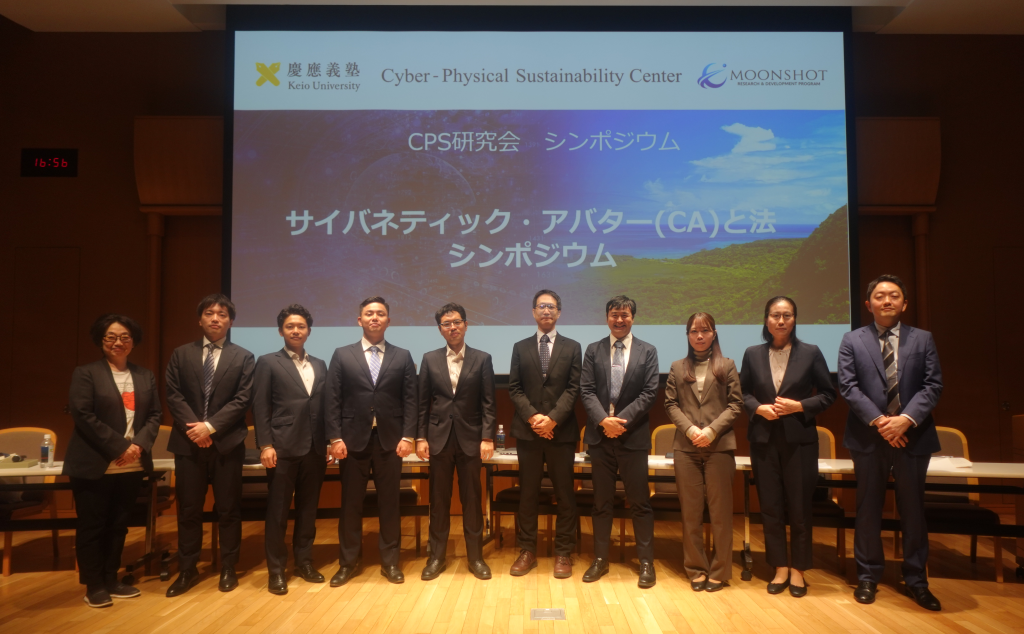
【Background】
Research of cybernetic avatar (CA) technology—and its practical application—is advancing. CAs are avatars that allow people to project themselves into cyberspace, and increasingly, even into the physical world—in this case, a robot serves as the avatar. Under the current legal system, which is built on the assumption that living people and legal entities are the main subjects in various activities, what possibilities and problems will arise if people start using CAs to carry out their activities instead?
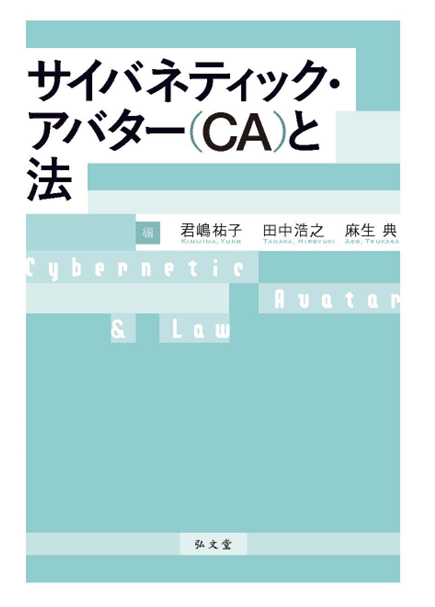
In October 2025, the Cyber-Physical Sustainability (CPS) Research Group published Cybernetic Avatars (CA) and Law (publisher: Kobundo), edited by Kimijima et al. (For publication details, click on the book image). It is a compilation of 19 essays, authored by legal scholars and attorneys specializing in respective fields of law, which have been edited into a systematic reference book that addresses potential legal issues arising from the practical application of CAs.
During the symposium, research findings on civil law, intellectual property law, information law, and competition law were presented. This was followed by a panel discussion and Q&A session.
Nine of the authors of the essays that are compiled in the abovementioned book, Cybernetic Avatars (CA) and Law, gave lectures (1) through (6) listed under “Schedule” below. Some of the speakers also provided updates on issues related to this topic.
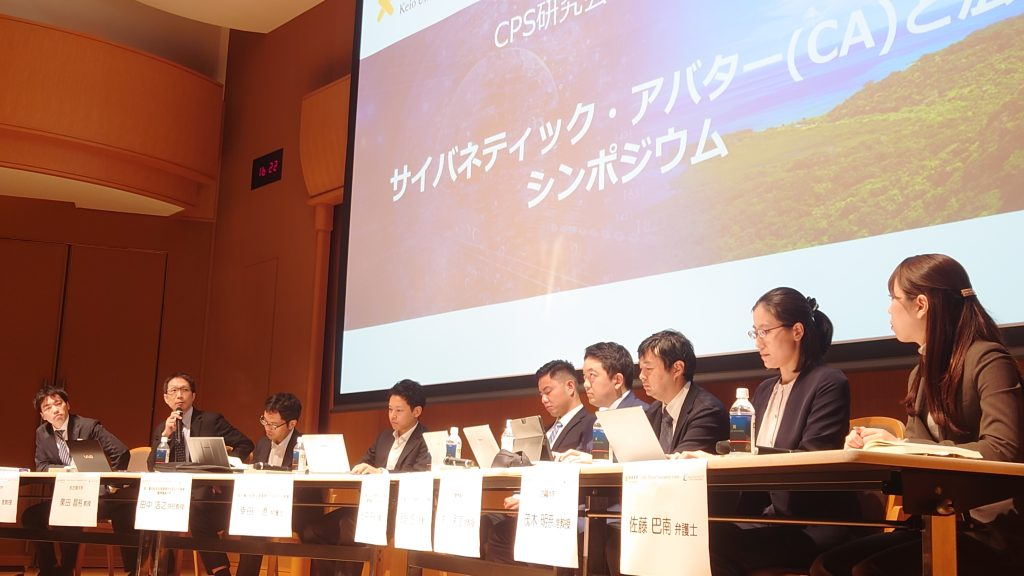
In the panel discussion, the speakers highlighted upcoming challenges relating to CA use in their respective legal fields, with a particular focus on the use and commercialization of intangible avatars. They engaged in a lively interdisciplinary discussion from diverse viewpoints, including intangible avatars’ relationship with copyright, personality, and other rights, data handling, the feasibility of support for intangible avatars within architecture and platforms, and the need for practical measures and legislation. During this session, Professor Yuko Kimijima and Associate Professor Kunifumi Saito also contributed to the discussion from the audience.
The symposium ended on a high note, with the speakers and participants mingling to engage in enthusiastic discussions for some time even after the event officially concluded.
Participation:
Total of 34 participants (11 speakers / 23 general attendees) (50 applicants)
Associate Professor Kunifumi Saito, who is one of the authors, and Attorney Kei Iida are included under general attendees.
【Venue】1st floor, North Building, Keio University Mita Campus (in-person format only)
【Language】 Japanese
【Speakers】 Masahiro Kurita (professor at Nagoya University Graduate School of Law)
Hiroyuki Tanaka (attorney at Mori Hamada & Matsumoto, project professor at Keio
University Graduate School of Law)
Yuki Matsui (attorney at Mori Hamada & Matsumoto, researcher at Keio University Graduate
School of Law)
Naoto Shimamura (attorney at Mori Hamada & Matsumoto)
Ryo Koda (attorney at Mori Hamada & Matsumoto)
Yusuke Iino (attorney at Mori Hamada & Matsumoto)
Kazuhiko Fuchikawa (associate professor at Keio University Faculty of Law)
Mina Mogi (associate professor at Hakuoh University Faculty of Law)
Hana Sato (attorney)
【Opening remarks】Yuko Kimijima (professor at Keio University Faculty of Law, director of the Cyber-
Physical Sustainability (CPS) Center)
【Moderator】Tsukasa Aso (associate professor at Keio University Law School)
【Schedule】
13:30 Opening remarks by Prof. Yuko Kimijima
<Part 1>
13:40 Lecture ① “Legal Subjectivity of CAs and Infringement of Personality Rights” by Masahiro Kurita
14:00 Lecture ② “Protection of Characters through Intellectual Property Law and CAs” by Yuki Matsui
14:20 Lecture ③ “Uses and Application of CA-related Data” by Hiroyuki Tanaka / Naoto Shimamura /
Ryo Koda
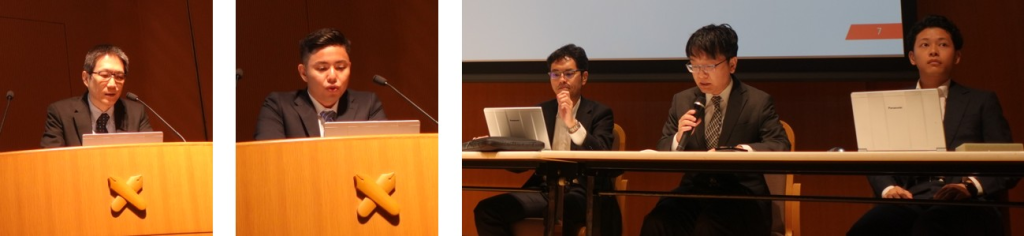
14:40 Lecture ④ “CAs and Contracts” by Mina Mogi
15:00 Lecture ⑤ “CAs and Tort Liability” by Hiroyuki Tanaka / Yusuke Iino / Hana Sato
15:20 Lecture ⑥“Platform Regulation” by Kazuhiko Fuchikawa
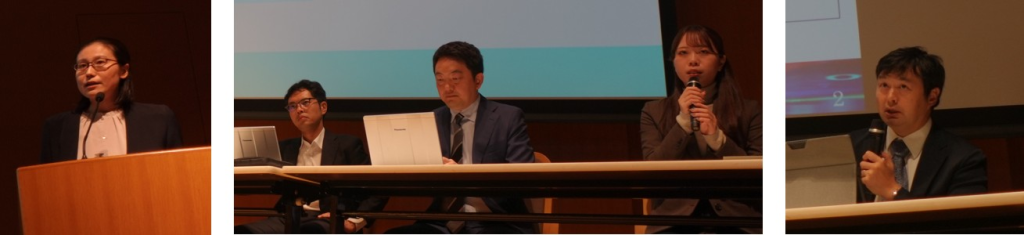
15:40 Break time
<Part 2>
15:55 Panel discussion
16:50 Closing remarks by Prof. Yuko Kimijima