

NEWS&EVENTS
-
REPORT
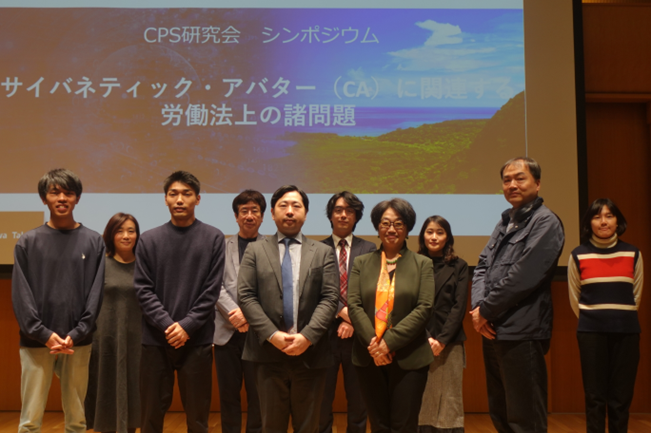
【Event overview】
The term “cybernetic avatar ” (CA) includes varied kinds of avatars, such as those used by humans to project themselves into the metaverse, and avatar robots. While the rise of CAs may bring about new styles of work, their use in the workplace may also present challenges that are not envisioned by existing labor law. This lecture focused on the relationship between CAs and current labor law. The speaker presented research that unpacked the challenges presented by CA use for labor law, including work time management and occupational safety and health (including the Japanese legal requirement that employers consider worker safety), and identified problems to be solved going forward.
Speaker: Masahiro Ueda (Partner at Mori Hamada & Matsumoto LPC)
Date and time: 18:15 to 20:00, Tuesday, November 18, 2025
Location: North Hall, Keio University Mita Campus
Organizer: Cyber-Physical Sustainability (CPS) Center, Keio University
Moderator: Yuko Kimijima (professor at the Keio University Faculty of Law and director of the CPS Center)
【Background】
Research of cybernetic avatar (CA) technology—and its practical application—is advancing. CAs are avatars that allow people to project themselves into cyberspace, and increasingly, even into the physical world—in this case, a robot serves as the avatar. Under the current legal system, which is built on the assumption that living people and legal entities are the main subjects in various activities, what possibilities and problems will arise if people start using CAs to carry out their activities instead?
【Lecture overview】
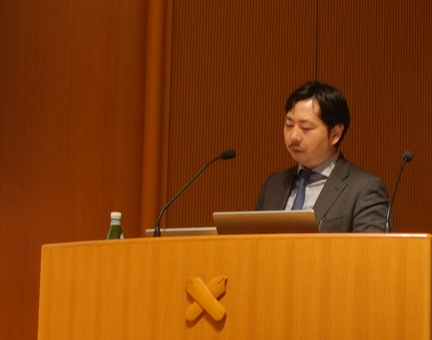
Attorney Masahiro Ueda, an expert in labor law and IT law, explained the potential issues and challenges posed by new styles of work that utilize CAs. He identified particular areas of existing Japanese labor law that may become problematic. These were: hiring, work time management, occupational safety and health (including the Japanese legal requirement that employers consider worker safety, and work-related accidents), harassment, and wage regulations. Attorney Ueda offered his observations about the challenges that may arise in each area when the “worker” as defined by Japanese law is the user of a cybernetic avatar. He also provided his analysis on the themes of “lex causae & jurisdiction” and “privacy”. This academic year’s research aimed to comprehensively identify and examine labor law–related issues posed by foreseeable examples of CA use. For the time being, issues should be addressed on a case-by-case basis through adapting interpretations of existing law and the drafting guidelines.
【The scene on the day】
The Q&A session featured a lively discussion including remarks from the moderator, Professor Yuko Kimijima, and questions such as: How should workers who use several avatars be paid? Should incidents of harassment that involve autonomous CAs be treated differently from those involving human-controlled CAs?
【Participation】
Total of 13 participants (2 speakers / 9 general attendees / 2 staff members)
【Schedule】
18:15 to 18:30 Opening remarks Prof. Yuko Kimijima
18:30 to 19:30 Lecture
Labor Law Issues Related to Cybernetic Avatars
1.Introduction
2.What is a cybernetic avatar (CA)?
3.The rise of CA-based labor and the challenges it poses for current labor law
19:30 to 19:45 Q&A
19:45 to 20:00 Closing remarks Prof. Yuko Kimijima