NEWS&EVENTS
-
REPORT
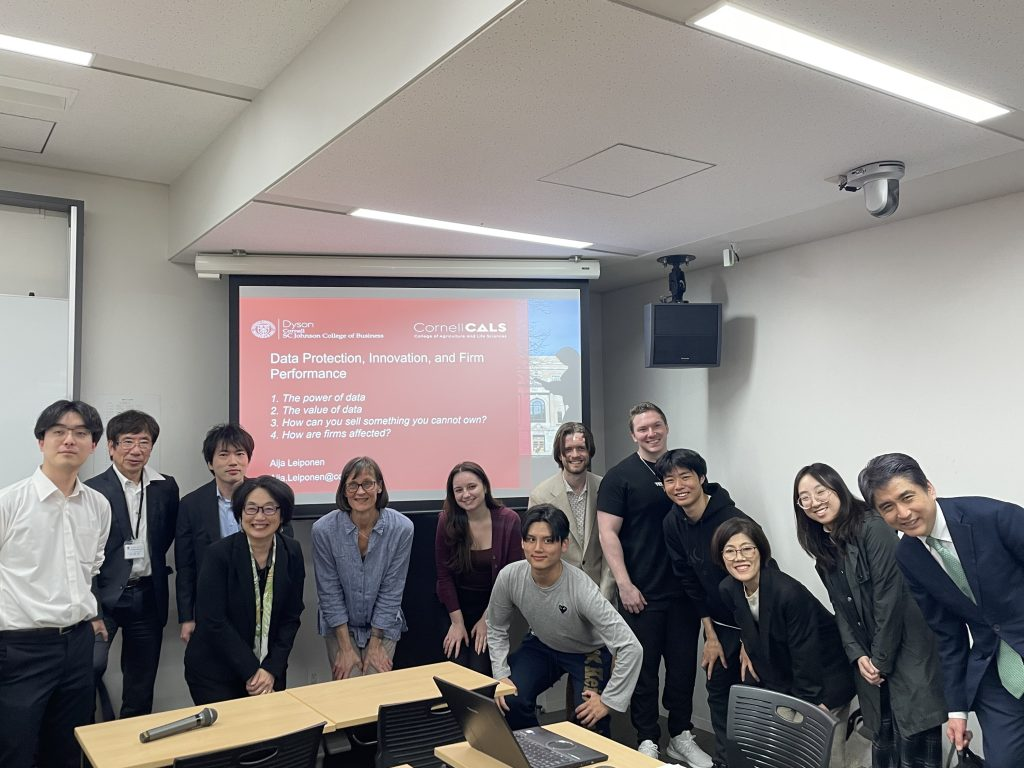
On April 17, 2025, the Cyber-Physical Sustainability Center (CPS) hosted Professor Aija Leiponen, a specialist in strategy and business economics at Cornell University, to lecture on the impact of corporate responses to data protection regulations on financial performance, with particular attention to the pressures arising from both mandatory regulation and voluntary industry initiatives. Several international students were in attendance, with approximately 50 participants joining both in person and online. The event was a great success , as many students gathered around Professor Leiponen to ask questions even after the session had ended.
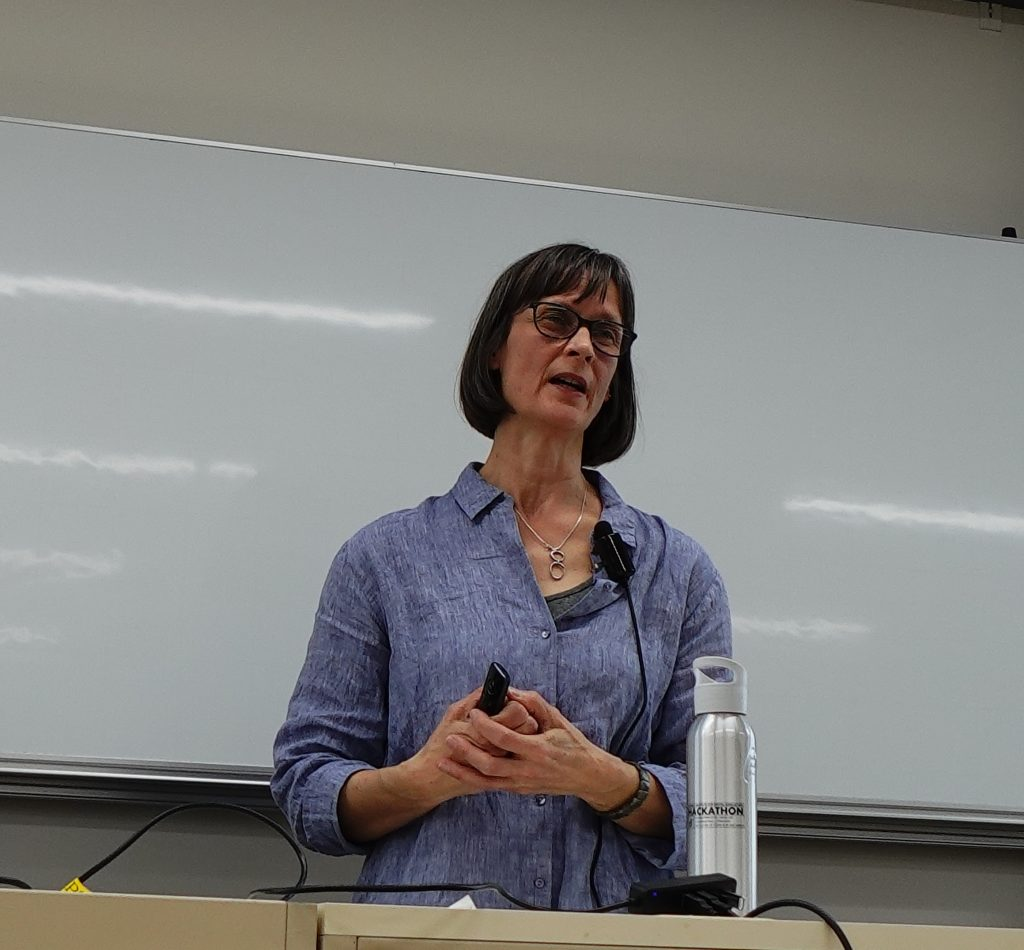
Lecturer: Professor Aija Leiponen
Cornell University SC Johnson College of Business
Senior Director of Programs, Dyson School
Professor (Strategy and Business Economics)
Program Director, MPS in Applied Economics and Management
Senior Director of Programs
https://business.cornell.edu/faculty-research/faculty/ael24/
Moderator: Professor Yuko Kimijima
Professor, Faculty of Law and Graduate School of Law at Keio University (specialist in intellectual property law)
Director of the Cyber-Physical Sustainability Center
(Schedule)
-16:40 Event begins/opening remarks
-16:45 “Data Assets, Data Protection Regulations, and Corporate Competitive Advantage”
-17:40 Q&A
-18:15 Closing
Lecture:
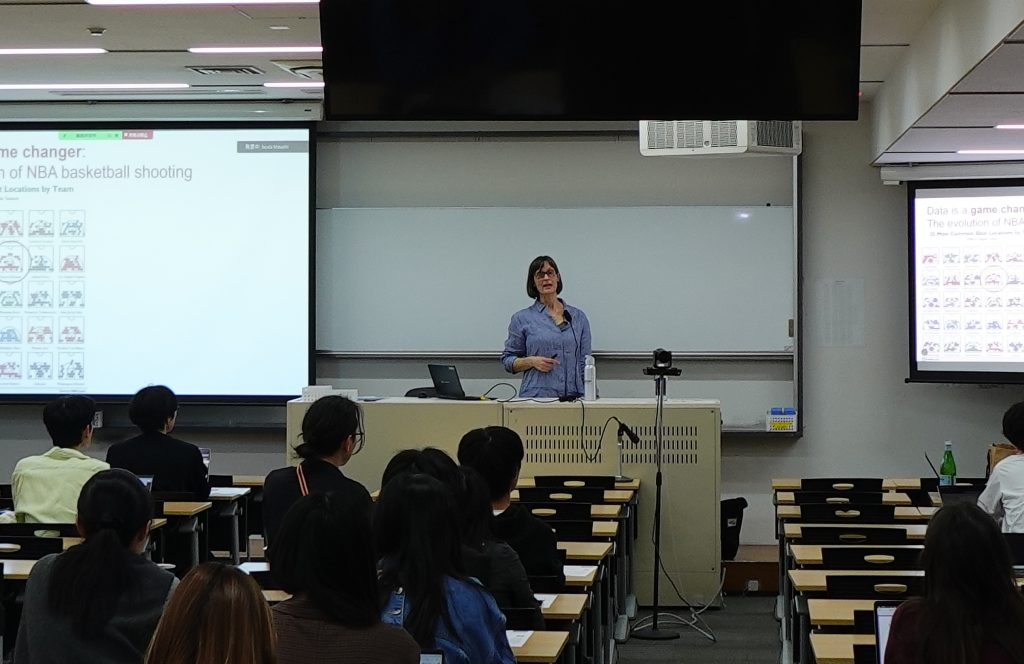
In a time when every company is becoming more reliant on their data assets, Professor Leiponen discussed and explained findings about what effects data regulations have on businesses’ financial performance and competitive advantage against other companies. Using a range of case studies, Professor Leiponen examined potential outcomes from two perspectives: the external regulatory environment and internal pressures to prevent data breaches, offering an opportunity for discussion.
Her first examples illustrated the value of data, including the real-world evolution of the NBA Houston Rockets’ data-driven three-point shooting strategy and a smart port ecosystem in which sensor data from cargo ships entering and leaving the harbor is shared and used to improve operational efficiency, demonstrating how data can act as a “game changer” that transforms industrial structures.
Professor Leiponen went on to discuss the semantics of data, including the factors on which data depends and how the value of data arises from multiple complementary data sources. She then turned to the implications of the 2015 cybercrime incident in which user data on a dating site was leaked, explaining that the General Data Protection Regulation (GDPR)[7] in the EU has become known as the strictest data protection law in the world, influencing both national data protection regulations and research, as well as signaling U.S. companies to strengthen their own data protection measures.
Data protection comes with steep costs that cannot be recouped in the short-term (such as infrastructure, data analysis, and customer-oriented analysis). While businesses anticipate long-term competitive differentiation and an increase in spending per customer, consumers are unlikely to value strong data protection, making it difficult for companies to recover the associated costs. Professor Leiponen pointed out that excessive data protection regulations can especially damage the competitiveness of small and mid-sized businesses. She concluded by saying that the “trusted use of data” will become a source of competitive advantage in both policy design and corporate strategy.
The event attracted a highly international audience. During the Q&A session, participants were proactive in asking questions about data handling for LLMs (large language models) and the role of data portability, leading to an in-depth exploration of the balance between data utilization and the protection of personal data and intellectual property data.
This event received support from the JST “Moonshot R&D Program” (project number JPMJMS2215), as part of the Cyber-Physical Sustainability Research Group.
Organizer: Keio University Cyber-Physical Sustainability (CPS) Center
Supported by: Faculty and Graduate School of Law.